 Corridor Utility Partners
Built to integrate into existing engineering organizations.
The delivery model is deliberately unexciting: your standards go in, production and validation happen in our delivery cell, and validated packages return to your project team and PE review. Nothing about your governance changes.
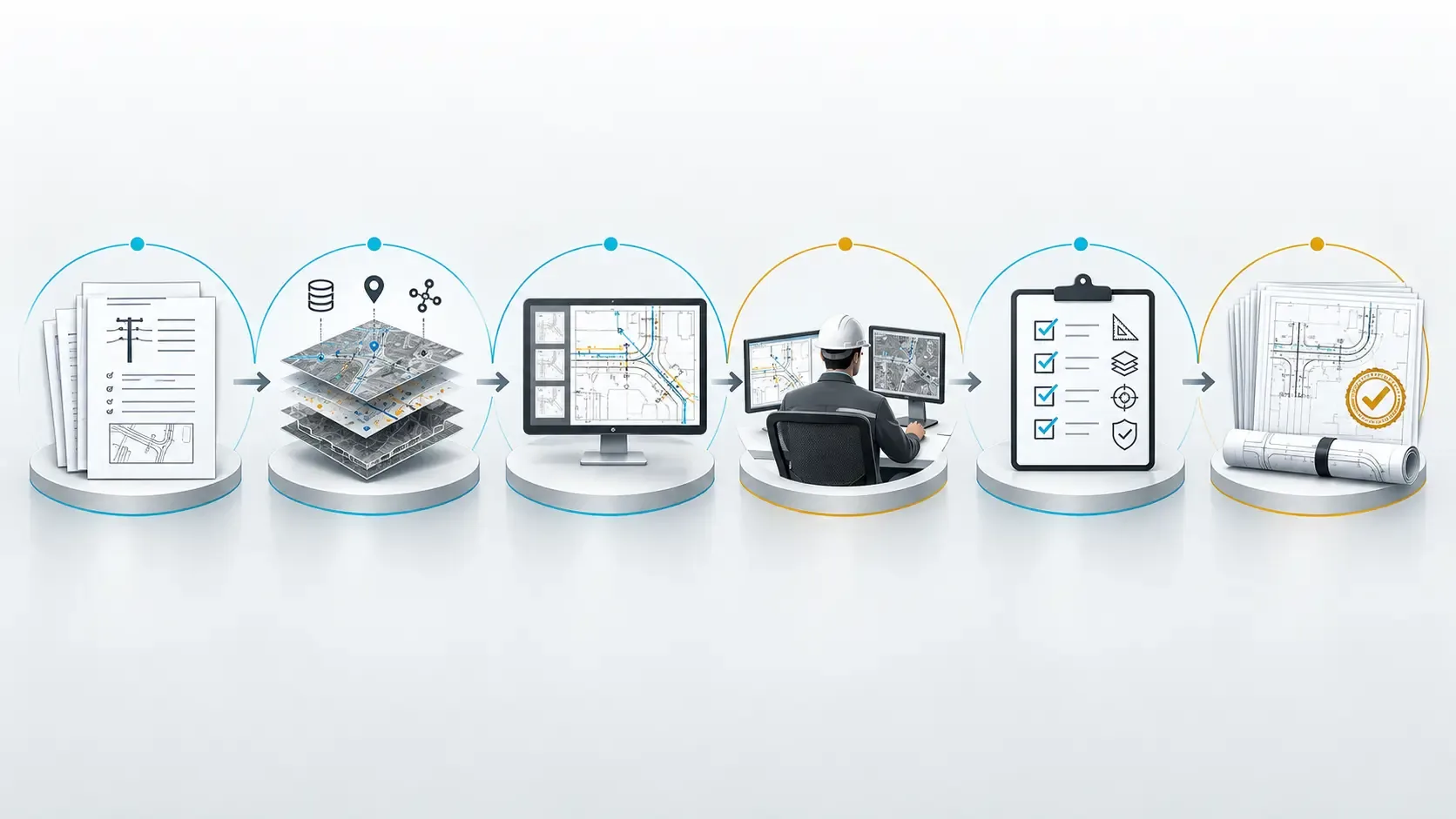
We work inside your environment, not next to it.
Before production starts, your design standards, drawing templates, approved materials, GIS schema and example projects are structured into a client environment. Every package after that is produced against those rules, not against ours.
Client knowledge environments →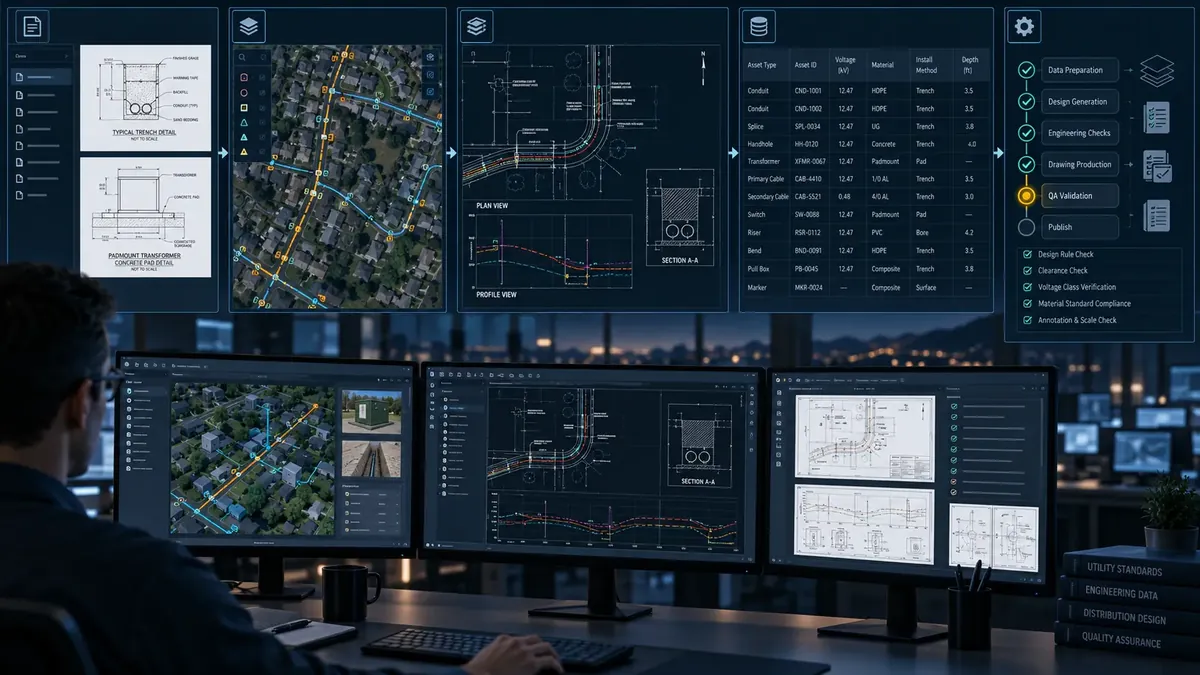
Who checks the automated output? Experienced engineers do.
Automation prepares, structures and checks. An experienced engineer reviews, challenges, adjusts, validates and escalates uncertainty. Every package carries a review log: what was automated, what was checked, what was changed.
- Engineering decisions and exceptions are always human
- Status marks your reviewers can read at a glance
- Uncertainty is escalated to your PE, never resolved by a model
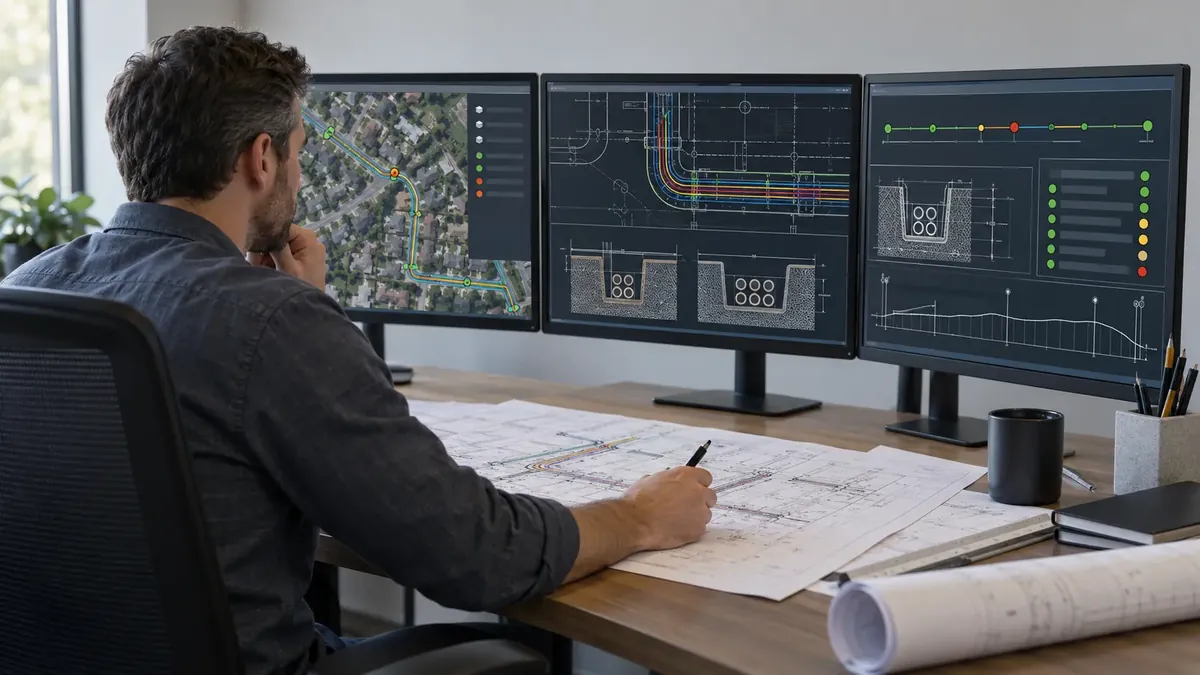
Checked against rules, completeness and consistency.
Design-rule checks
Clearances, separations, voltage class, material and standard compliance against your rule set.
Completeness & consistency
Every sheet, annotation, scale and cross-reference present and consistent across the package.
Requirement traceability
Each requirement linked to where it is satisfied; verification records per work package.
Review-comment processing
Your reviewers' comments tracked to closure and fed back into the client environment.
Our delivery model operates within your existing engineering governance and professional review structure.
Project requirements come from your firm; production, validation and QA happen in our delivery cell; output returns to your project team; PE review and responsible charge remain with your licensed engineers. We never claim licensed professional engineering services.
Grown in steps your review process can absorb.
See it on your own work packages.
A scoped pilot is the fastest way to judge the model. Tell us what your team is trying to deliver.
Discuss capacity →